
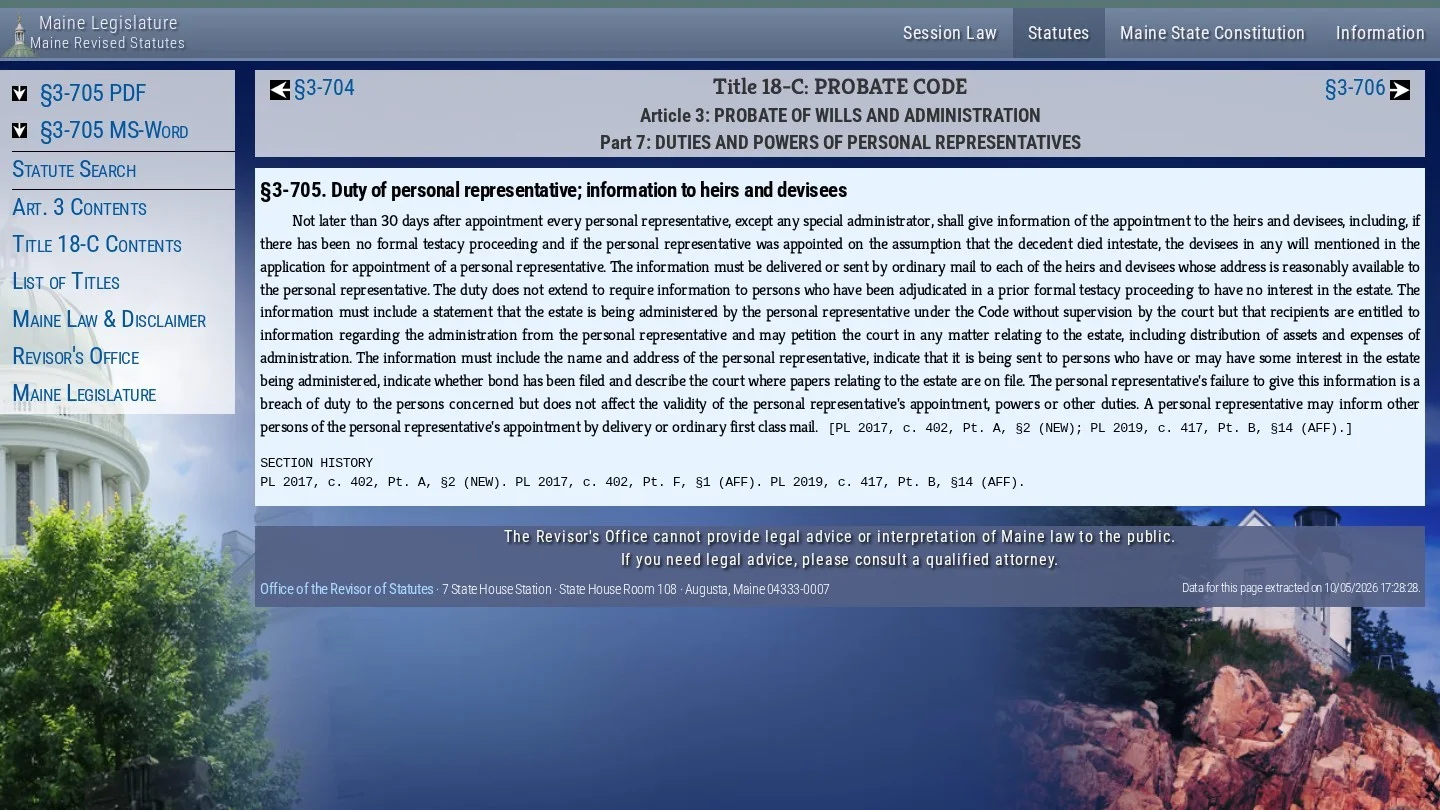
Beneficiary rights during probate are the legal rights you have when you inherit under a will or state law while a court handles the estate. In short, you have the right to be told about the case, to see the will, to learn what the estate holds and to ask the court to step in when the executor fails. In Maine, for example, the executor must tell heirs and those named in the will within 30 days after appointment, while Texas allows 60 days after the will is admitted.
These rights are set by state law, so they shift from one state to the next. About 18 states have adopted the Uniform Probate Code at least in part, and those states tend to share the same basic duties. Other states, such as Texas and California, write their own rules and deadlines.
Most of the time, the rights simply work in the background. The executor sends a letter, lists the assets, pays the bills and hands out what is left. However, when an executor goes quiet or seems to favor one heir, these same rights give you a way to get answers, and in some cases a judge can remove the executor altogether.

Who Counts as a Beneficiary in Probate
A beneficiary in probate is anyone with a right to part of the estate. That right can come from a will that names you or from state law when there is no will. People named in a will are often called devisees, while family who inherit by law are heirs. Maine’s notice rule, for example, covers heirs and devisees alike, so both groups get the same basic news about the case.
The line matters because your rights flow from your status. A cousin who is not in the will and would not inherit by law usually has no say in the case. On the other hand, a child left out of a will is still an heir, so that child may get notice and a chance to object even though the will gives them nothing.
Getting Notice That Probate Has Begun
You have a right to a letter once the case is under way. Under Maine’s version of the uniform code, the executor must mail it not later than 30 days after appointment. The letter has to give the executor’s name and address, say whether a bond was filed and name the court where the estate papers are kept.
Texas sets a longer clock. There, the executor must send word to each person named in the will no later than the 60th day after the will is admitted to probate. Then, by the 90th day, the executor has to file a sworn note or a lawyer’s form with the court to show the letters went out.
California works through hearings instead. Before the court rules on the case, the decedent’s family and anyone who may have a right to part of the estate must get notice of the hearing, and an adult who is not part of the case mails it. So if a relative has died and no letter has come, ask the court clerk in that county whether a case is open.
Seeing a Copy of the Will
You can see the will, and some states make the executor send it to you. In Texas, the letter to each person named in the will must include either a copy of the will and the court order admitting it, or a short list of the gifts. A list must also give the court, the case number and the date the will was admitted.
Other states lean on the court file. Maine’s notice, for instance, must name the court where papers are on file, which tells you where to go to read the will and the other filings. If you get only a summary, you can still ask the executor or the clerk for the full text.
Inventory and Accounting Rights
You have a right to know what the estate owns and where the money goes. In Maine, the executor must draw up a list of assets within 3 months after appointment. It shows each asset in fair detail, with its market value on the date of death and any debt tied to it, such as a mortgage.
The executor can either file that list with the court or mail it to interested persons who request it. Either way, anyone with an interest who asks must get a copy, so put your request in writing and keep a record of when you sent it.
California courts check the books more closely. The executor files a list of assets and their values on form DE-160, and courts usually want a report a year after the executor is named. At the end, the executor files a final account. But the court can skip it if every person who gets a share signs a waiver. So think twice before you sign one if you have doubts about the money.
Asking the Executor for Information
You can ask the executor for facts about the estate, and in uniform code states the first letter says so. In Maine, the letter must tell heirs and devisees that they may get information from the executor and may ask the court for help with how assets are handed out and what the estate spends on costs.
An executor who skips the letter breaks a duty owed to the people left out. Even so, in Maine that lapse does not undo the appointment or the executor’s powers. So the fix is a request to the court, not a fresh start. Before that, send a polite written request with a clear date for a reply.
Getting Your Share in a Fair Time
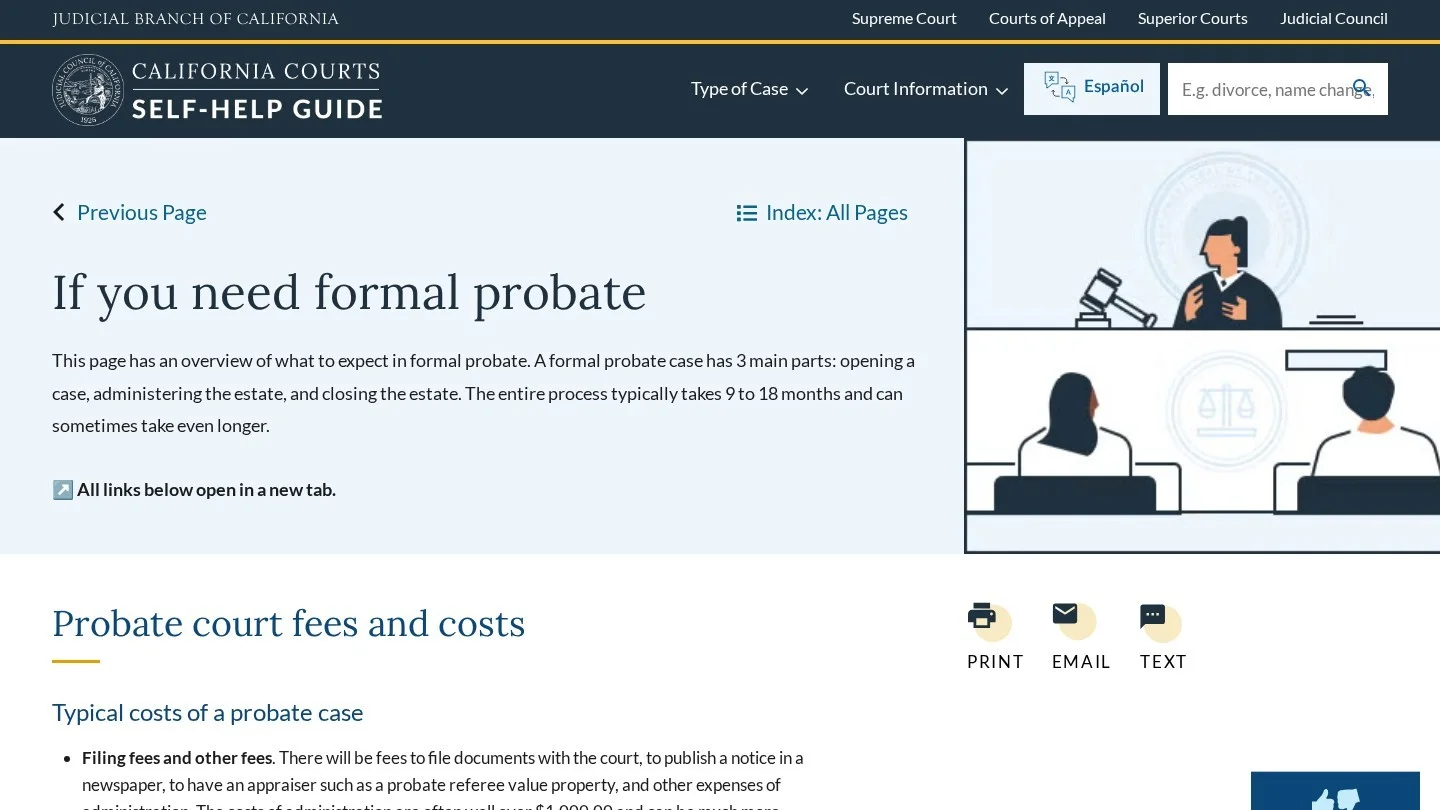
You have a right to see the estate wrapped up in a fair time, though the law rarely sets one fixed end date. In California, formal probate typically takes 9 to 18 months and can take even longer, since debts must be paid and the court has to sign off.
To close a California case, the executor files a final report, a final account and a request to hand out what is left. Then the court sets a hearing, people with an interest get notice of it, and the judge decides whether to approve the distribution of what is left. If a case drags on well past these ranges with no clear reason, you can ask the court to look into it.
Objecting to the Executor or the Will
You can object to steps the executor takes and, in many states, challenge the will itself. In Maine, the first letter must tell heirs and devisees that they may petition the court about how the estate is run and handed out. In California, people with an interest get notice of the final hearing, so they can show up before the judge rules.
A will contest is a bigger step than an objection. Common grounds include a will signed under pressure, a person who lacked the mental ability to make a will or a forged signature. Deadlines to contest vary by state and can be short, so check the rule for your state as soon as you get notice, not after the estate closes.
Removing an Executor Who Fails
Any person with an interest in the estate can ask the court to remove an executor for cause. In Maine, that request can come at any time. Cause exists when removal is in the best interest of the estate. It also exists when the executor lied about key facts to get the job, ignored a court order, became unable to do the work or ran the estate badly.
So gather proof before you file. Bank records that show missing money, copies of your written requests and the dates they went unanswered, and a missed deadline for the list of assets all help a judge see the problem.
How Beneficiary Rights Differ in Uniform Probate Code States
In states that follow the Uniform Probate Code, many estates run with little court oversight. So heirs lean more on the first letter and their right to ask for records. In Maine, for example, the letter must say that the estate is being run without court supervision and that heirs can still go to the court if they need to.
States outside the code often build in more court steps. California, for instance, uses court hearings, a yearly report and a final account that a judge reviews. Texas, by contrast, sets its own clocks, such as notice within 60 days of the will being admitted. As a result, the same family could face very different paperwork depending on where the person who died lived.
Probate Timeline for Beneficiaries
A probate case moves through a few set stages, and each one gives beneficiaries something to look for. The deadlines in the table are examples from single states, so your own state may use different ones.
| Stage | What Beneficiaries Get | Example Deadline | State |
|---|---|---|---|
| Executor named | A letter with the executor’s name and address. It names the court too. | Within 30 days after appointment | Maine |
| Will admitted | A letter with a copy of the will or a list of your gift. | Within 60 days after the will is admitted | Texas |
| Proof of notice | A sworn note filed with the court. | By the 90th day after the will is admitted | Texas |
| Inventory | A list of assets and their values. Ask for it in writing. | Within 3 months after appointment | Maine |
| Yearly report | A report filed with the court. | Usually a year after appointment | California |
| Final account and payout | A final account and word of the last hearing. | Whole case often takes 9 to 18 months | California |
| Removal request | A chance to ask the court to replace the executor. | At any time, for cause | Maine |
When a Beneficiary Should Talk to a Lawyer
Talk to a lawyer when deadlines pass with no letter, when money seems to be missing or when you are thinking about a will contest. For example, a probate attorney can send a formal demand for the list of assets, go through an account line by line and ask the court to remove the executor. You can find estate planning lawyers on our list, or search by state in our law firm directory.
Sometimes the fight is less about the will and more about the family. When a probate dispute grows into a wider family conflict, the family lawyers we cover can help, and you can also browse legal practices across the USA. If the estate used a trust instead of a will, our guide to wills vs trusts explains why most trust assets skip probate.
FAQs About Beneficiary Rights in Probate
Can a Beneficiary Demand a Copy of the Will?
Yes, in most cases. In Texas, the executor must send each person named in the will a copy of the will or a summary of the gift, along with the court details. In other states, you can read the will in the court file.
How Long Does an Executor Have to Send Notice?
It depends on the state. Maine gives the executor 30 days after appointment, while Texas allows 60 days after the will is admitted to probate.
Can a Beneficiary See the Estate’s Bank Records?
You can at least see the list of assets and, in court-run states, the accounts. In Maine, any person with an interest who asks must get a copy of the inventory. If you need more detail, ask the executor in writing first and then ask the court.
Can Beneficiaries Remove an Executor?
Yes, if there is cause. In Maine, a person with an interest in the estate can ask for removal at any time, for reasons such as ignoring a court order or mismanaging the estate.
Do Beneficiaries Have to Sign a Waiver of Accounting?
No, signing is a choice. In California, a final account can be skipped only if all the people who will receive a share sign a written waiver, so you can decline and ask for the full account instead.